

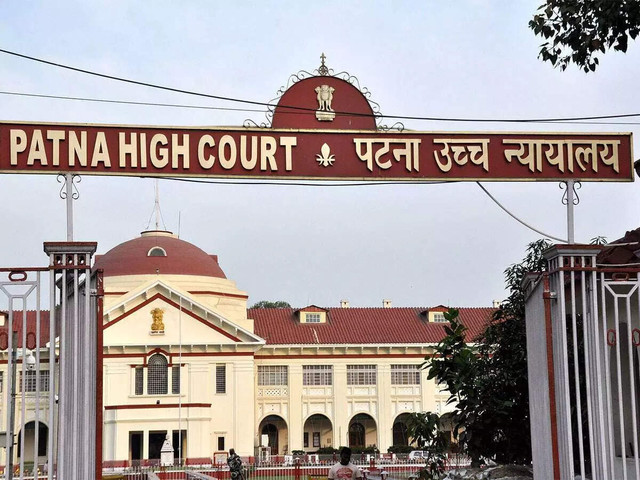
The patna high court stands as a pillar of justice in eastern India, serving the people of Bihar with dedication and integrity. Established during the British era, this institution has evolved into a vital part of the country’s judicial framework. For anyone interested in understanding the legal landscape of Bihar, learning about the patna high court provides valuable insights into how justice is delivered at the state level.
History and Establishment of Patna High Court
The roots of the patna high court trace back to the early 20th century. A proclamation for setting up the court was issued in 1912, and the foundation stone was laid in 1913 by Viceroy Lord Hardinge. The court was formally inaugurated on February 3, 1916, with official work beginning on March 1 the same year. Sir Edward Maynard Des Champs Chamier served as its first Chief Justice.
Initially, the Patna High Court had jurisdiction over Bihar and Orissa. After Orissa got its own High Court in 1948, the scope narrowed to Bihar. In 1972, a circuit bench was established at Ranchi, which later became the Jharkhand High Court following the state’s creation in 2000. The court celebrated its centenary in 2016 with grand events, highlighting its century-long contribution to justice.
The majestic building in Patna, with its colonial architecture, remains a landmark. Over the decades, the patna high court has adapted to modern needs while preserving its heritage. It has produced distinguished judges who rose to higher positions, including two Chief Justices of India – Bhuvaneshwar Prasad Sinha and Lalit Mohan Sharma.
Jurisdiction and Powers
The patna high court exercises original, appellate, and writ jurisdiction across Bihar. It hears appeals from district courts, handles civil and criminal matters, and entertains public interest litigations through writ petitions under Articles 226 and 227 of the Constitution.
Key areas include:
- Civil Matters: Disputes related to property, contracts, family issues, and more.
- Criminal Cases: Appeals against convictions, bail applications, and revisions.
- Constitutional Matters: Protection of fundamental rights and judicial review of government actions.
- Commercial Disputes: Through dedicated commercial divisions for faster resolution.
The court plays a crucial role in overseeing subordinate judiciary in Bihar, ensuring uniformity in legal procedures and timely justice delivery.
Current Leadership and Judges
As of recent updates, the Acting Chief Justice of the patna high court is Justice Sudhir Singh. The sanctioned strength of judges is 53, though the actual number varies based on appointments and vacancies. The court maintains a roster system for bench formations, including single judges and division benches.
Prominent past judges include:
- Justice Rekha Doshit, the first woman Chief Justice of the court.
- Justice Indu Prabha Singh, the first woman judge.
- Justice Gyan Sudha Misra, who later became a Supreme Court judge.
The selection process involves recommendations by the Chief Justice of India in consultation with the Governor and other authorities, ensuring high standards of judicial appointments.
Services and Facilities Offered
The patna high court has embraced technology to improve accessibility:
- Virtual Hybrid Hearings: Advocates and litigants can participate remotely.
- e-Sewa Kendra: For filing cases and obtaining certified copies.
- Online Cause Lists: Easily accessible on the official website.
- Mobile App: Latest Android app for updates and case tracking.
- RTI Portal: Transparent information dissemination.
- Legal Aid Services: Through Patna High Court Legal Services Committee.
These initiatives make the judicial process more efficient and user-friendly for common citizens.

Notable Judgments and Contributions
Over the years, the patna high court has delivered landmark rulings impacting society. Recent cases have covered topics like bail in sensitive matters, blacklisting of contractors in public distribution systems, and interpretations in criminal law. The court actively handles public interest cases related to education, health, environment, and governance in Bihar.
It has addressed issues such as NEET paper leak investigations, PDS foodgrain diversion, and various writ petitions seeking accountability from authorities. These decisions not only resolve individual disputes but also set precedents for lower courts.
The court contributes significantly to legal education through its library and by supporting the Bihar Judicial Academy. It also monitors juvenile justice and family courts across the state.
Challenges and Reforms
Like other high courts, the patna high court faces challenges such as case backlog, infrastructure needs, and ensuring speedy trials. However, with e-courts projects, digital filing, and better case management, progress is visible. Recruitment drives for judicial officers and staff help strengthen the system.
- Case Clearance Initiatives: Regular monitoring of disposal rates.
- Training Programs: For judges and court staff.
- Transparency Measures: Publication of annual reports and statistics.
- Public Access: Improved facilities for litigants and lawyers.
These efforts reflect the court’s commitment to delivering timely and fair justice.
How to Access Information and Services
Visitors to the official website can find:
- Daily cause lists and judgments.
- Judge profiles and rosters.
- Recruitment notifications and results.
- Tenders and administrative updates.
- Links to district courts in Bihar.
Advocates can use e-pass facilities, while the general public benefits from online display boards and compensation case dashboards. The court also provides Hindi translations of important orders for better understanding among local residents.
https://i.ibb.co/4wJ1VpCG/images-q-tbn-ANd9-Gc-Smc-Fb8-MMznpb-LO20qt-Xdt9-z-I8u-Ne-G57-LT6-FYo-S6-URlasqd-Xj-FDfuh-Uv-U-s-10.jpg
Role in Bihar’s Development
The patna high court influences governance, rights protection, and socio-economic issues in Bihar. From land disputes in rural areas to urban development matters, its decisions shape the state’s progress. By upholding the rule of law, it fosters trust in democratic institutions.
Many landmark cases have highlighted concerns like women’s safety, education rights, and environmental protection. The court’s proactive approach in PILs has led to positive changes in public policy and administration.
Conclusion In summary, the patna high court remains an essential institution dedicated to justice, fairness, and constitutional values in Bihar. Its historical significance, combined with modern reforms, makes it a beacon for litigants seeking resolution. Whether you are a law student, lawyer, or concerned citizen, staying informed about the patna high court empowers you to understand and engage with the legal system effectively. As it continues to evolve, the court will undoubtedly play a key role in shaping a more just society for future generations. With ongoing digitization and focus on accessibility, the future looks promising for efficient justice delivery under its watch.


